

AI Product Architecture: Why Most AI Apps Fail Before Users Notice
The whiteboard was already full before anyone mentioned users. Boxes connected to other boxes. Retrieval pipelines. Vector databases. Memory layers....
July 3, 2026, Aditya Kumar Raj
June 25, 2026, 10:04 am Aditya Kumar Raj
AI Product UX was not part of the roadmap discussion. The team was focused on something else.
A promising SaaS company had spent months integrating AI capabilities into its product. Customers had started asking questions about automation. Competitors were launching AI assistants. Investors wanted to understand the company’s AI strategy. Product leadership felt growing pressure to respond.
The decision appeared straightforward.
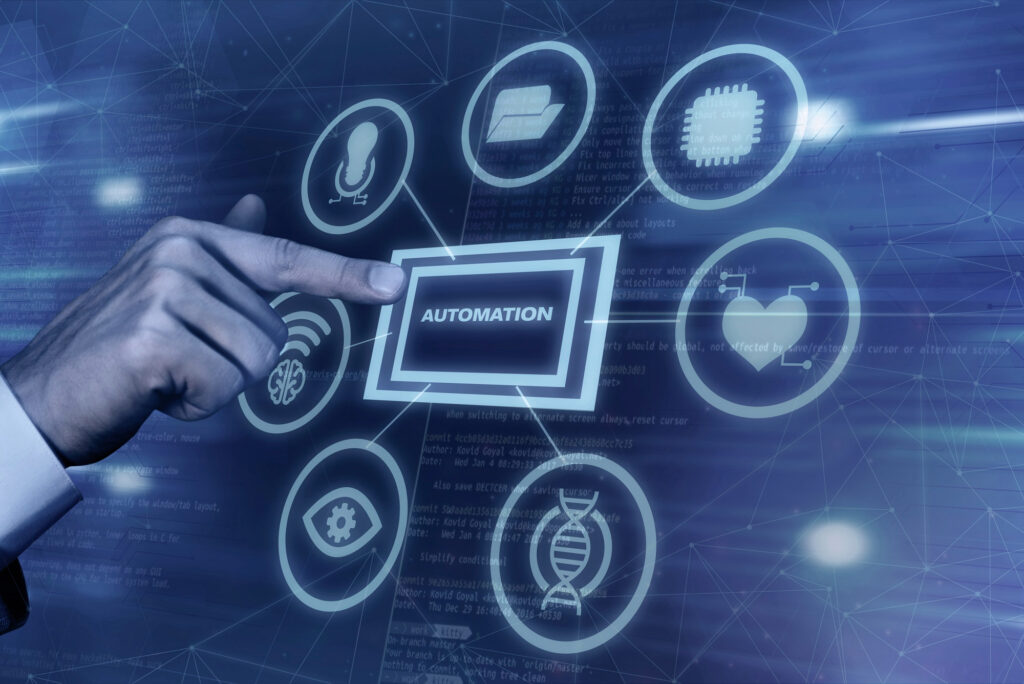
The team would introduce an AI assistant inside the platform, automate several workflows, and create a conversational interface that could perform common tasks.
The engineering effort moved quickly.
Within a few months, the product looked dramatically more advanced than it had before.
The company celebrated the launch.
Customers were curious.
Industry observers were impressed.
Yet something unexpected began happening shortly afterward.
Users were engaging with the AI features far less than anticipated.
The technology worked.
The experience did not.
Few product decisions feel reckless while they are being made.
This one certainly did not.
The company had evidence supporting its direction. Customers genuinely wanted help completing repetitive work. Teams were looking for ways to reduce manual effort. AI capabilities had become increasingly accessible. Competitors were investing heavily in similar initiatives.
The opportunity appeared obvious.
As planning progressed, the product team became increasingly confident.
New ideas emerged every week.
The AI assistant could summarize information.
Every capability seemed useful.
Every addition appeared to increase product value.
The roadmap expanded accordingly.
What began as a focused AI initiative slowly transformed into something much larger.
The product was no longer gaining a feature.
It was acquiring an entirely new interaction model.
Yet very little time was spent examining how users would actually experience that transition.
The excitement surrounding AI made that omission easy to overlook.
The first warning signs appeared quietly.
Customer success teams noticed that users frequently ignored the AI assistant entirely.
Support conversations revealed confusion around what the AI could actually do.
Some customers expected complete automation.
Others assumed the assistant functioned like a search tool.
Many users simply did not trust the results.
The company initially interpreted these issues as adoption challenges.
These explanations seemed reasonable.
But they failed to explain an uncomfortable reality.
The AI functionality itself was not the primary source of friction.
The experience surrounding it was.
Users were struggling to understand when to use AI.
They were struggling to predict outcomes.
They were struggling to understand system behavior.
The product had become more intelligent.
It had also become less understandable.
Traditional software generally operates according to predictable rules.
Users click a button.
A specific action occurs. A workflow produces a consistent result.
People gradually build mental models that help them navigate the product confidently.
AI changes that relationship.
The same prompt can produce slightly different outcomes.
The same workflow can behave differently depending on context.
Recommendations may evolve over time.
Results often contain uncertainty.
These characteristics make AI powerful.
They also make product design significantly more difficult.
Many teams underestimate this shift.
They treat AI as a feature rather than recognizing it as a fundamentally different interaction model.
As a result, AI capabilities are often inserted into existing products without sufficient consideration for how users will understand them.
The technology functions correctly.
The user experience becomes increasingly fragile.
The company eventually conducted deeper customer interviews.
What emerged was revealing.
Users were not rejecting AI.
Most participants actually believed the technology could be valuable.
Their frustration stemmed from uncertainty.
The product was asking users to surrender control without providing sufficient confidence.
This is where many AI initiatives begin to struggle.
The challenge is rarely model quality alone.
The challenge is often explanation, expectation, and usability.
Product teams spend enormous energy improving intelligence.
Far less energy is invested in helping users understand that intelligence.
Yet understanding is what creates adoption.
The problem appears technical from a distance.
In practice, it is often a product experience problem.
As adoption challenges emerged, the startup responded in a familiar way.
Additional AI features were introduced.
More automation options appeared.
New workflows were created.
The assumption seemed logical.
If customers were not using existing AI capabilities, perhaps additional capabilities would increase engagement.
The opposite occurred.
The product became harder to understand.
Users now faced multiple AI tools with overlapping responsibilities.
Several workflows appeared capable of solving the same problem.
Customers struggled to determine which tool they should use first.
Complexity increased faster than clarity.
The irony was difficult to ignore.
The company had invested heavily in reducing user effort.
Yet users were now spending more effort simply understanding the product.
This pattern is increasingly common across modern software.
AI capabilities accumulate faster than product understanding.
Products become more powerful while simultaneously becoming more difficult to navigate.
From the outside, the platform appears more advanced.
From the user’s perspective, it becomes more exhausting.
The company eventually shifted its approach.
Instead of asking what additional AI capabilities could be introduced, teams began examining how customers made decisions.
Workflows were simplified.
AI recommendations became more transparent.
Automation boundaries were clarified.
Users received clearer signals about what the system knew, what it assumed, and where uncertainty existed.
The changes were not particularly sophisticated from a technical perspective.
Most involved communication rather than intelligence.
Yet adoption improved.
Trust increased.
Customer confidence grew.
The product became easier to understand.
And once understanding improved, the value of the underlying AI became significantly more visible.
This revealed something important.
The primary bottleneck was never model capability.
The bottleneck was human comprehension.
Many discussions about AI focus on technology.
Model quality.
Inference speed.
Agent architectures.
Automation capabilities.
These conversations are important.
They are also incomplete.
As AI capabilities continue improving, the differentiating factor for many products will not be intelligence alone.
It will be how effectively that intelligence is translated into understandable experiences.
The strongest AI products rarely feel intelligent because they contain the most advanced models.
They feel intelligent because users understand what is happening.
The product establishes trust.
These outcomes are not primarily technical achievements.
They are product achievements.

The startup eventually found its footing.
It succeeded because it became more deliberate about how users experienced intelligence inside the product.
That distinction matters.
Modern software teams have unprecedented access to AI capabilities.
Building intelligent systems is becoming easier every quarter.
Creating understandable systems remains remarkably difficult.
The future challenge for many AI products will not be generating more intelligence.
It will be creating experiences that humans can comfortably navigate, trust, and understand.
Because when product understanding collapses, additional intelligence rarely helps.
It often makes the experience worse.
And that may become one of the defining product challenges of the AI era.
Many conversations about AI products begin with models, automation, and capabilities.
The more consequential conversation often begins elsewhere.
It begins with understanding how people interpret decisions, build trust, navigate uncertainty, and make sense of increasingly intelligent systems.
At OpenUI, product discussions around AI rarely start with what the technology can do. They start with how people will experience it. Because the long-term success of AI products will depend not only on intelligence, but on whether that intelligence remains understandable, usable, and aligned with real human needs.
Check our AI/ML Services


4th floor, Specturm Tower, Mindspace,
Malad (W), Mumbai, Maharashtra
India - 400064






© OpenUI 2025 - 2026
© OpenUI 2025 - 2026