

AI Product Architecture: Why Most AI Apps Fail Before Users Notice
The whiteboard was already full before anyone mentioned users. Boxes connected to other boxes. Retrieval pipelines. Vector databases. Memory layers....
July 3, 2026, Aditya Kumar Raj
June 3, 2026, 5:24 pm Aditya Kumar Raj
Building a Product and Building a Business are not the same. Discover why great products don’t always become great businesses and what changes that.
In reality, many are building a product.
The distinction sounds semantic at first. After all, every business needs a product, and every product presumably exists within a business. The two appear inseparable.
Yet some of the most common mistakes in early-stage companies emerge from failing to recognize where one ends and the other begins.
A founder spends months refining onboarding. The team redesigns workflows. New features are launched. Customer feedback is incorporated. The product improves continuously.
But growth remains inconsistent.
Users arrive but do not stay. Revenue grows slower than expected. Acquisition costs rise. Product complexity increases. The company becomes better at building while remaining uncertain about whether it is actually progressing.
The product is moving forward.
The business may not be.
Understanding why requires looking at how products and businesses solve fundamentally different problems.
At its simplest level, a product exists to help someone achieve something.
The job might be obvious. It might be subtle. But every successful product creates value by helping users complete a task, reduce friction, save time, make better decisions, or achieve a desired outcome.
Product teams spend most of their time improving that experience.
They refine workflows. Simplify interfaces. Prioritize features. Reduce confusion. Improve onboarding. Remove friction.
These activities matter because products succeed or fail based on whether users find value in them.
Yet this is also where many teams become trapped.
When product improvement becomes the primary measure of progress, teams begin assuming that a better product automatically produces a better company.
Sometimes that happens.
Often it does not.
Because products and businesses operate under different forms of logic.
A product can be useful while remaining commercially weak. A product can delight users while struggling to acquire them. A product can solve a meaningful problem while lacking a sustainable business model around that solution.
Product quality matters enormously.
It simply does not answer every business question.
While products create value, businesses create systems for repeatedly delivering and capturing that value.
The distinction seems subtle but changes how organizations think.
Product discussions often revolve around questions such as:
Business discussions operate differently.
They focus on questions such as:
These questions are less visible than product discussions, which is partly why founders often spend disproportionate amounts of time on product development.
Product progress feels tangible.
Business progress often feels abstract.
A new feature can be demonstrated.
A stronger retention strategy cannot.
An improved interface is immediately visible.
A healthier customer acquisition system is not.
As a result, many startups gradually become product optimization engines while neglecting the broader systems required to create a sustainable company.
Part of the challenge comes from the emotional nature of product building.
Building products feels productive.
Shipping creates momentum. Teams see progress. Customers react. Feedback arrives. Decisions feel concrete.
Business building is frequently slower and less satisfying.
Improving positioning might require months of experimentation.
Understanding customer behavior takes time.
Building distribution channels rarely provides immediate validation.
Strengthening retention often involves operational improvements that users never consciously notice.
Compared to launching features, these activities feel indirect.
This creates a dangerous pattern.
Whenever growth slows, teams look toward the product for answers.
New features appear.
Roadmaps expand.
Development accelerates.
The underlying assumption is that product expansion will eventually solve business challenges.
Sometimes it does.
Often it simply creates a larger product.
One of the more common startup realities is that companies continue improving products long after their biggest constraints have shifted elsewhere.
The bottleneck is no longer functionality.
It becomes positioning, distribution, retention, focus, differentiation, or execution.
Yet because teams are structured around building, they continue responding with more building.

One of the more interesting realities of product development is that products eventually begin reflecting the internal thinking of the organizations behind them.
Teams that prioritize feature requests tend to build products that feel fragmented.
Teams that chase every opportunity often create products that struggle with focus.
Organizations that optimize for speed frequently accumulate complexity.
Companies that understand user behavior deeply tend to build products that feel intuitive.
What users experience on the surface is often a reflection of countless decisions made internally.
This is why products rarely become complicated overnight.
Complexity accumulates through repeated decisions.
The same is true of businesses.
Business strength is rarely the result of one breakthrough moment.
It emerges through repeated decisions around positioning, customer understanding, operational discipline, and strategic focus.
In both cases, compounding matters more than individual actions.
The difference is that product compounding and business compounding are not always the same thing.
A feature can improve the product while creating operational complexity for the business.
A business decision can improve growth while weakening the product experience.
Navigating these tensions is where product leadership becomes significantly more difficult than feature prioritization.
The most successful product companies rarely think in terms of product versus business.
Instead, they recognize that every meaningful decision sits somewhere between the two.
Product thinking without business thinking creates fragile companies.
Business thinking without product thinking creates forgettable products.
The strongest organizations understand how user value, business value, design decisions, engineering decisions, customer behavior, and market dynamics interact with one another.
They understand that products are not isolated artifacts.
Products exist inside systems.
The quality of those systems often determines whether a product becomes a sustainable company or remains an interesting solution with limited impact.
Many founders ask:
“What should we build next?”
It is not a bad question.
But it is often incomplete.
A more useful question might be:
“What outcome are we trying to create, and is building the best path toward it?”
Sometimes the answer is product-related.
Sometimes it is not.
Sometimes growth comes from better onboarding rather than more functionality.
Sometimes retention improves through positioning clarity rather than additional features.
Sometimes simplification creates more value than expansion.
The challenge is recognizing when the company’s problems have shifted from product problems to business problems.
Many startups notice this transition too late.
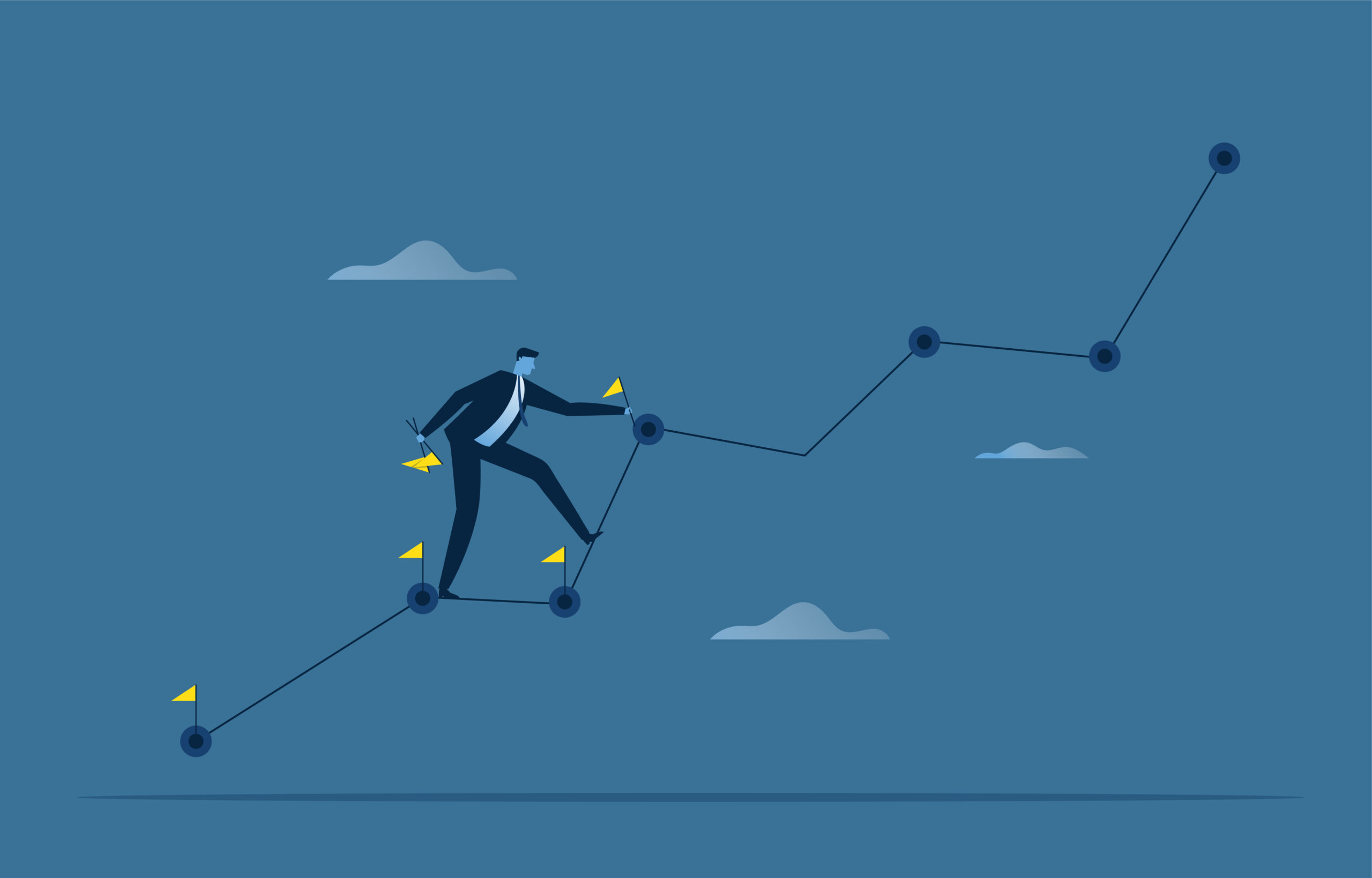
Products and businesses are deeply connected, but they are not interchangeable.
Products solve problems.
Businesses create systems that repeatedly deliver, capture, and scale value around those solutions.
Confusing the two often leads teams into a cycle of perpetual building, where product activity creates the appearance of progress while larger business constraints remain untouched.
The strongest companies eventually learn that product excellence alone is not enough. Neither is business optimization in isolation.
Sustainable companies emerge when product decisions and business decisions reinforce one another over time.
That is often what separates products that remain interesting from businesses that endure.
Building a product is difficult. Building a product that can evolve into a sustainable business is even harder.
For founders navigating product strategy, MVP decisions, or product scaling challenges, discussing the product before development often prevents months of unnecessary complexity later.
OpenUI works with startups and product teams to align product thinking, design, and engineering around long-term business outcomes.

4th floor, Specturm Tower, Mindspace,
Malad (W), Mumbai, Maharashtra
India - 400064






© OpenUI 2025 - 2026
© OpenUI 2025 - 2026